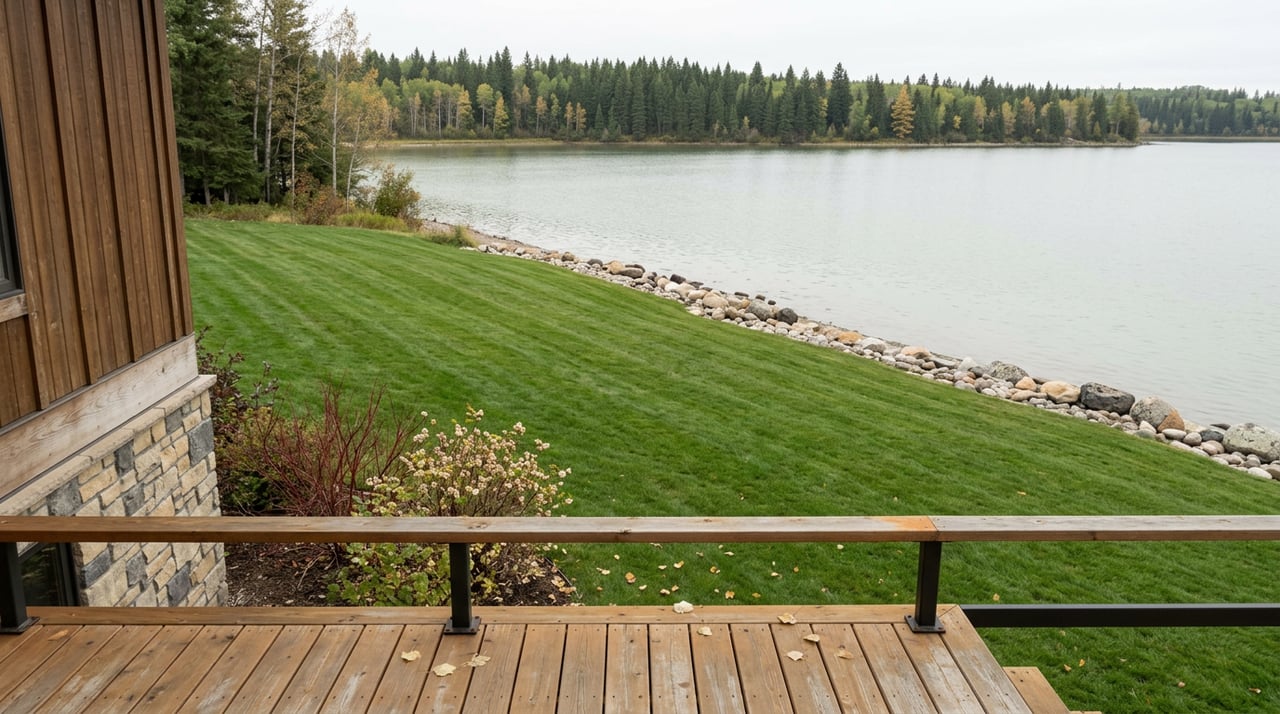
A stack of steel pilings sat on a shoreline lot in Lakeside back in early February, catching morning light on a parcel slated for a private marina. A board member with the Flathead Lakers photographed the pile the morning before the county was even scheduled to vote on the variance that would let it be used. The photos went into public comment. The vote happened anyway. Commissioners approved the request unanimously.
That parcel sits up the lake's west shore, under Flathead County's jurisdiction rather than Lake County's, so it isn't the same government your closing paperwork will run through. But the story that unfolded over the following months is the one every waterfront buyer on this lake should sit with before writing an offer, because it answers a question the listing sheet never does: what happens to a dock permit after the ink dries.
The Permit Kept Moving After It Was Signed
Flathead County's lakeshore rules cap dock length at 100 feet from the mean high water mark. Discovery Land Company, developer of the planned Flathead Lake Club, asked for a variance to build one 159 feet out, arguing the water was too shallow closer to shore to moor boats safely. Commissioners called it a minor variance and approved it on February 3.
Three weeks later, the watchdog group Citizens for a Better Flathead sued, arguing the county skipped the public hearing and environmental review the state's Lakeshore Protection Act requires for a project of that scope. On March 12, a district court judge agreed enough to issue an injunction, halting construction on the dock while the case proceeds. A month after that, with the stop-work order still in effect, commissioners granted the developer a permit extension anyway, so the underlying approval wouldn't lapse while the litigation drags on.
Here is the part that matters for a Polson purchase agreement: as of the most recent filings in that case this spring, the dock's legal status was still unsettled, months after commissioners first approved the variance. A permit is not a single event. It's the start of a clock that keeps running long after closing.
Three Governments, One Lake
Polson sits inside the exterior boundaries of the Flathead Indian Reservation, on the lake's south shore, which is Lake County's jurisdiction rather than Flathead County's. That distinction is not paperwork trivia. Lake County's own lakeshore protection regulations define a 20-foot construction zone running along the high water line and route in-city dock and shoreline applications through the Polson City-County Planning Board rather than the county acting alone. On the Flathead County side of the lake, the comparable ordinance limits waterfront owners to one dock per property, a detail worth confirming locally rather than assuming Lake County's version reads identically.
Property within reservation boundaries can carry an additional layer: shoreline work there may also require sign-off from the Confederated Salish and Kootenai Tribes. Depending on exactly where a parcel sits relative to city limits and tribal land status, a Polson-area buyer could be looking at review from Lake County, the Polson City-County board, and CSKT, not just one of the three.
None of that shows up in a listing photo of a dock at sunset. It shows up when you ask who actually issued the permit on file, and whether that permit still lines up with whichever body has authority over that particular stretch of shoreline today.
What Changed on February 1
Lake County updated its own lakeshore protection regulations effective February 1, 2026. That update landed in the same window as the Lakeside dispute, and it means any dock, boathouse, or shoreline structure permitted under the county's older rules should be checked against the current version before you assume it's compliant.
This matters most at two moments: when a permit comes up for renewal, and when an owner wants to alter or rebuild an existing structure. Under the county's rules, an approved permit that isn't acted on within its window lapses and becomes void, which means a fresh application, a fresh fee, and a fresh review under whatever standard is current at that point. If a seller tells you the dock has always been there and the permit is grandfathered, ask to see the actual permit number and its issue date, then confirm with the planning office that the structure as built still matches what was approved and that nothing about the newer regulations creates a conflict.
The Septic Question Sitting Next to the Dock Question
Waterfront due diligence on this lake rarely stops at the shoreline. Only Polson and portions of Bigfork have municipal sewer service reaching the lakeshore. Everywhere else on Flathead Lake, wastewater runs through a septic system, and lakefront setback rules tend to run stricter than inland ones, often requiring the drainfield to sit 100 feet or more from the high water mark. On a smaller or older waterfront lot, that setback can eliminate the obvious spot for a replacement system entirely.
Replacing a failed septic system on this lake typically runs somewhere between $15,000 and $35,000, based on current cost data compiled this year, and a meaningful share of the systems around Flathead Lake are decades old and were never designed for today's usage. Before you get attached to a property, ask for the septic permit on file, confirm the bedroom count it was approved for still matches the house, and find out when it was last inspected. A dock that needs a variance and a septic system that needs a rebuild rarely show up on the same disclosure line, but they're both quietly telling you the same thing: this property's improvements were built to an older standard than the one governing it now.
What Insuring the View Actually Costs
Waterfront carries its own premium once you get past the purchase price. Insurance on lakefront property here typically runs 40 to 60 percent higher than a comparable inland home, with annual premiums in the neighborhood of $2,800 to $4,200 for a million dollars of coverage, against roughly $1,800 to $2,400 inland. Ice damage to docks and shore stations often needs its own endorsement, and standard policies can exclude flood coverage even though Flathead Lake doesn't flood the way a river does, since the exposure insurers are pricing is wind, wave action, and structural damage to the dock itself.
None of this is a reason to walk away from lakefront. It's a reason to get the real number in front of you before you're under contract, not after, so the property you fall for on a summer afternoon still makes sense on paper in January.
Questions Worth Asking Before You Write an Offer
- Who is the permit holder of record for the dock, and does that name match the current owner or an entity that predates them
- Was the dock built before or after the permit was finalized, and is there any record of a stop-work order or variance dispute tied to the parcel
- Does the property fall under Lake County, the Polson City-County Planning Board, or CSKT jurisdiction, and has that been confirmed with the relevant office rather than assumed
- What is the septic system's approved capacity, when was it last inspected, and where does the drainfield sit relative to the 100-foot lakefront setback
- Has the current owner obtained a waterfront insurance quote in the last year, and does the policy include or exclude flood and ice damage
A Couple of Questions Buyers Usually Ask
Does every dock on Flathead Lake need its own permit? Yes. Any construction, alteration, or reconstruction within the lakeshore protection zone, which extends 20 feet from the high water mark under Lake County's rules, requires a permit before work begins. Routine maintenance with hand tools has narrow exceptions, but adding, moving, or rebuilding a dock does not.
If a dock already exists and looks fine, do I still need to check the permit? You do. An existing structure tells you it was built at some point, not that the paperwork behind it is current, transferable, or free of dispute. The Lakeside case shows a permit can be approved, extended, and still be sitting in active litigation months after the original vote.
Is Polson waterfront regulated the same way as the north shore? The same lake, but not the same office. Polson sits in Lake County, with in-city parcels running through the Polson City-County Planning Board, while the Lakeside dispute falls under Flathead County. Reservation land status can add a tribal layer on top of either.
Waterfront on this lake rewards patience more than speed. The properties worth owning for decades are the ones where the permit history, the septic system, and the insurance number all check out quietly, not just the ones that photograph well at golden hour. If you're weighing a Flathead Lake purchase near Polson and want someone who will run these questions down before you're emotionally attached to a dock, Stockman's Land is glad to help you sort what's solid from what's still in motion. Schedule a free consultation and let's look at the paperwork together before you look at another listing.