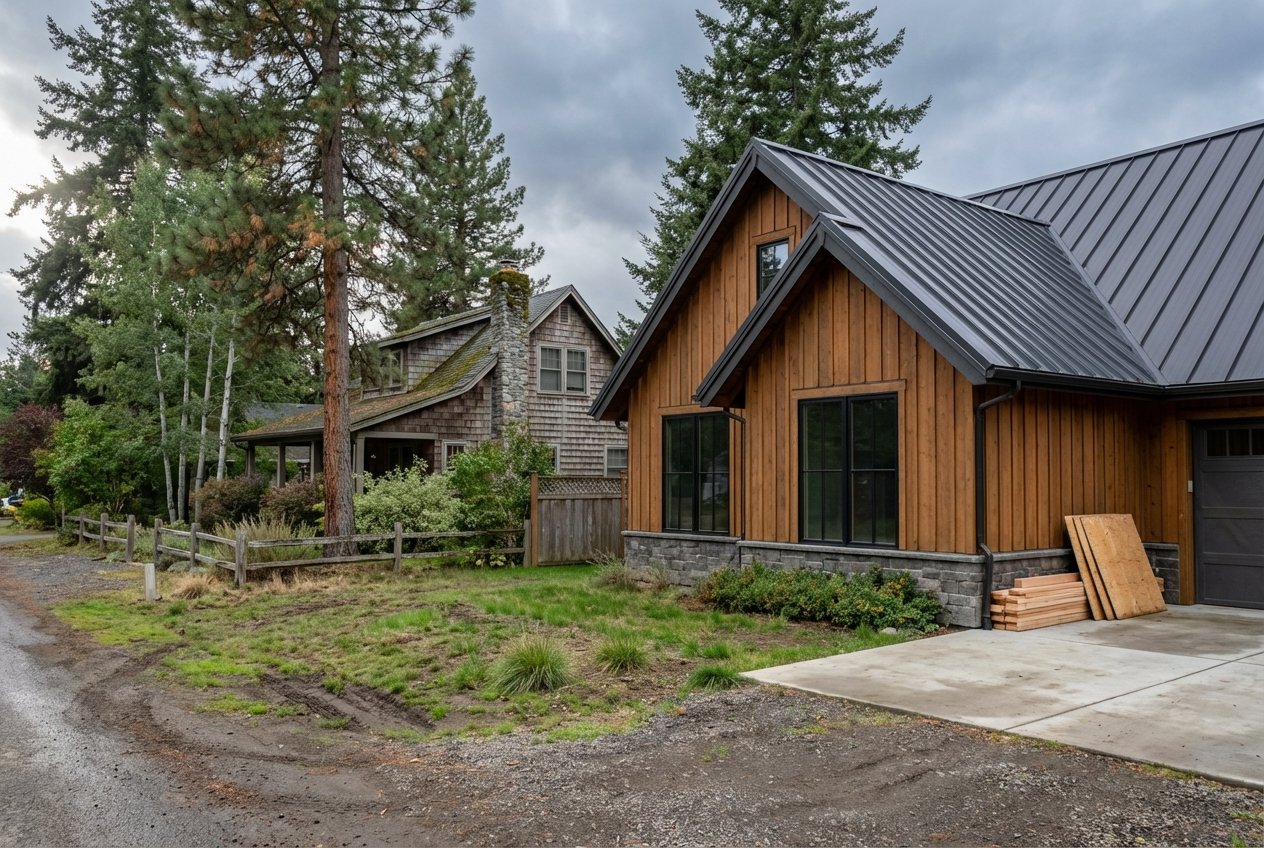
Should you build a brand-new home in Kalispell or buy an existing one with character and a quicker timeline? With the valley growing fast and neighborhoods evolving, the right choice depends on your budget, timing, and lifestyle. In this guide, you’ll get a clear, side-by-side look at new construction versus resale homes in Kalispell, plus a local checklist you can use with any property. Let’s dive in.
Kalispell market at a glance
Kalispell is growing quickly. The U.S. Census estimates the city’s July 1, 2024 population at 31,296, up about 24.8% since 2020. That growth fuels new subdivisions and more buyer options across the valley. Census QuickFacts confirms the latest population trend.
Local reporting highlights active construction in north Kalispell and ongoing subdivision approvals that add both production neighborhoods and custom builds. That means you’ll see a wide mix of offerings at different price points and timelines. Coverage of north Kalispell construction helps explain why inventory feels different block to block.
What “new construction” means here
Where you’ll find it
You’ll see most planned new neighborhoods along growth corridors, especially in north Kalispell. Communities like Silverbrook and nearby phased projects offer single-family homes and townhomes with modern street networks and amenities. Builders range from production firms with set floor plans to local custom teams.
Lot sizes and HOAs
In newer subdivisions, lots commonly run about 0.16 to 0.33 acres, with many homes around a quarter acre. Some projects include smaller cottage lots, while a few phases offer larger parcels. Many planned communities have an HOA that covers amenities and common-area upkeep. It’s common to see dues roughly in the 120 to 125 dollars per month range in amenitized neighborhoods. Always confirm the current fee and scope for the specific lot.
Build types and timelines
You’ll typically choose among spec, semi-custom, and fully custom builds. Production homes can move faster because plans and options are set. Custom work adds design flexibility but often takes longer. As a rule of thumb, production homes often complete in about 6 to 9 months, while custom builds can run 9 to 18 months depending on design, site work, and weather. Local builders note that schedules vary and that written timelines and contingencies matter. See a local custom builder’s overview of timelines and warranties on DC Builders’ Kalispell page.
Permits and utilities basics
Inside Kalispell city limits, the city manages building permits and inspections. Outside city limits, Flathead County handles zoning and permits. You can review city FAQs and connect with Development Services for process questions on the City of Kalispell website.
Utilities differ by location. Inside the city, expect municipal water and sewer service in most platted neighborhoods. Outside the city, plan for well and septic unless a development provides community systems. The city also has rules for utility billing and out-of-city rates that can affect operating costs. You can review water and sewer program details in a city handout hosted here.
What existing homes offer
Neighborhood character and lots
Established Kalispell neighborhoods near downtown often feature mature trees, sidewalks, and smaller lots, with many bungalows and historic homes on about 0.11 to 0.24 acres. In legacy neighborhood pockets outside the core, some older homes sit on larger parcels, sometimes around a half acre or more. These areas offer a “finished” neighborhood feel that can take new subdivisions years to develop.
Walkability and trails
Walkability varies sharply by address. Many downtown blocks score high, while suburban streets rely more on driving. Check any property’s Walk Score and explore the growing bike and pedestrian network, including the Parkline rails-to-trails corridor near downtown. For a quick sense of address-level walkability, start with WalkScore.
Maintenance and unknowns
Buying an existing home often gets you in the door faster. The tradeoff is potential deferred maintenance. Roofs, foundations, insulation, and mechanical systems can require near-term investment. Renovation budgets are notoriously unpredictable, so lean on a thorough inspection and contractor bids before closing. A national overview of buy-versus-build considerations explains why budgeting buffers matter for older homes; see this primer.
Head-to-head: choose what fits you
Use these factors to compare a specific new build to a resale you like. The winner is the home that aligns with your priorities.
- Price and total cost. Add it all up: purchase price, upgrades, lot premiums, HOA dues, and utility connection fees. For resale, consider likely near-term repairs.
- Timeline to move-in. New builds usually take months. Spec and production builds can be faster than custom, but weather and inspections still add risk. Custom timelines often span 9 to 18 months; see builder guidance.
- Customization. New construction lets you choose finishes and sometimes modify plans. Resale gives you a set footprint, with remodel options later.
- Energy performance. New homes often include tighter envelopes and efficient HVAC. Ask about HERS testing and ENERGY STAR features. The ENERGY STAR new homes guide explains benefits that can lower operating costs and help future resale.
- Maintenance risk. New homes usually come with builder and manufacturer warranties. Resale may require immediate updates. Request written warranty details on any new build.
- Neighborhood maturity. Older areas offer established trees and street patterns. New subdivisions bring modern infrastructure and sometimes clubhouses or trails, but they can take years to feel mature. Verify what is built today versus planned.
- Wildfire and insurance. Evaluate vegetation, defensible space, and home-hardening for properties near timber or grassland. Local programs at FireSafe Flathead can guide mitigation steps.
- Financing. Buying resale is a straightforward mortgage. Building may involve a construction-only loan or a construction-to-permanent option. Requirements, appraisals, and draw inspections differ. Review options with your lender and study the basics with this construction-loan overview.
Checklist for Kalispell buyers
Use this list to ask smart questions of builders, listing agents, and the city or county. Bring it to showings and builder meetings.
- Is this lot inside Kalispell city limits? If not, plan for county permits and likely well and septic. Confirm jurisdiction and taxes with the city and the Flathead County Treasurer’s parcel tools.
- Who provides water and sewer service, and what are the hookup or impact fees? Ask the utility office for current rates and out-of-city multipliers. Review city water and sewer details here.
- Has the lot been final-platted? Are there outstanding conditions on the plat or phasing? Timing can affect when you can close and build. The city’s Development Services team can help you navigate steps; see the Kalispell permit FAQ.
- For new construction, what is the builder’s schedule and what parts are guaranteed? What weather or materials contingencies apply, and what are the remedies if milestones slip? Ask for a written schedule and terms. See local timeline context from DC Builders.
- What is the policy for change orders and allowances? How are upgrades priced and when are selections due? Clarify this early to avoid budget surprises.
- What warranties come with the home, and how are claims handled? Request the written warranty, coverage durations, and a sample claim process.
- Is there an HOA? What are the dues, what services are covered, and what are the architectural controls? Ask for the CC&Rs and the current HOA budget.
- What is the wildfire risk at this address, and what mitigation is recommended? Ask about defensible space and ignition-resistant construction. Learn more through FireSafe Flathead.
- Who pays for utility extensions, sidewalks, lighting, and curb-gutter? When will these be built? Request the subdivision improvements agreement or developer disclosures.
- If financing a build, will your lender do a one-time-close construction-to-permanent loan or a two-close structure? What insurance and draw inspections are required? Review basics at BuildingAdvisor’s construction-loan guide.
- For an existing home, what did the inspection find, and what is the realistic near-term repair budget? Get bids when possible, especially for roofs, foundations, and HVAC.
Local examples to make it real
Here is how this plays out on the ground. A new 3-bedroom in a north Kalispell subdivision might sit on roughly a quarter-acre lot with sidewalks, trails, and monthly HOA dues that cover amenities and snow removal. You would select a finish package, target a several-month build, and lock in written warranty coverage.
Compare that to a similarly sized home in an older in-town neighborhood on a smaller lot with established trees and high walkability. You could move in weeks after closing, but you might budget for insulation upgrades or mechanical updates in the first few years. The better choice depends on which tradeoffs match your goals.
Work with a local guide
Every Kalispell block tells a different story. Lot size, walkability, utilities, HOA scope, and build timelines can swing your costs and your day-to-day life. If you want a calm, expert walkthrough of your options, reach out. I can pair real-time comps with builder details and help you map a clear plan from first tour to keys in hand. Schedule a free consultation with Blayne Larson.
FAQs
What should I budget for HOA dues in new Kalispell subdivisions?
- Many amenitized neighborhoods in Kalispell charge monthly dues. It is common to see figures around 120 to 125 dollars per month, but always verify the exact amount and services for the specific lot.
How long does new construction usually take in Kalispell?
- Production homes often complete in about 6 to 9 months. Custom builds can take 9 to 18 months depending on design, site work, inspections, and weather. Get a written schedule and contingencies.
Are city water and sewer available everywhere in Kalispell?
- Most platted areas inside city limits have municipal service. Outside the city, expect well and septic unless a development provides shared systems. Confirm service and fees with the city utility office.
How do I check if a lot is inside city limits or in the county?
- Ask your agent to verify with the City of Kalispell and use the Flathead County Treasurer’s parcel tools to confirm jurisdiction and tax details.
Which is more walkable: new subdivisions or older neighborhoods?
- It varies by address. Many older in-town blocks score higher for walkability, while new areas often include sidewalks and trails. Check any property’s Walk Score for a location-specific view.